
Sex Offender Checks in Bossier Parish
The Louisiana State Police State Sex Offender and Child Predator Registry is the main public search for Bossier Parish. It covers registrants reported throughout Louisiana and supplies the broadest official set of public search options. The Bossier Parish Sheriff's sex-offender page provides the local law-enforcement route. That local page is useful when a resident needs to verify which office handles registration or report a concern about compliance.
The sheriff's page also shows why state and parish roles should not be confused. Louisiana State Police maintains the public database. The sheriff registers and verifies people who reside in its jurisdiction and investigates local compliance issues. The official Bossier source below identifies that parish connection.
A local source can answer a current address question, while the state profile supplies the published registry record.
Bossier Registry Conditions Screen
Entry begins at the Louisiana State Police registry program page. The public search requires users to pass through conditions and warnings before viewing results. Those terms matter. Louisiana says registry data is gathered from official sources but may change between verification events, and it tells users to confirm an address before acting on it.
The program page connects the public search to state law, reporting channels, and the agency that maintains the statewide system.
Search Bossier Registry Records
Use the official Louisiana offender search, accept its conditions, and choose the narrowest useful search. A name works when spelling is known. Location tools are better for awareness around a home, school route, or family destination. Reverse searches may also accept a phone number, email address, or online identifier where the interface provides those controls.
- Open the official search and read the accuracy and lawful-use conditions.
- Search by name or use Bossier Parish, a city, ZIP code, address, or map area.
- Compare the result photo, age, physical description, and address rather than relying on a name alone.
- Open the full profile, note its status and last verification information, then contact law enforcement about material conflicts.
The search screen is a discovery tool. A match should lead to closer profile review, not an assumption based on a list row.
| Field Label | Type | Required | Notes |
|---|---|---|---|
| Last and first name | Text | No | Use known spelling; aliases may appear on profiles. |
| Parish | Select | No | Choose Bossier for a parish-wide result set. |
| City or ZIP | Text or select | No | Narrows results to a local postal area. |
| Address or map radius | Location search | No | Useful for nearby-address awareness when offered. |
| Phone, email, or internet ID | Reverse search | No | Louisiana law provides for these identifier searches. |
Verify Bossier Registry Addresses
An address on a registry profile is not a live tracking signal. A person may have reported a move that is still being processed, failed to report a change, or entered an institution. The state therefore warns users to verify information with the responsible law-enforcement agency. In Bossier Parish, start with the sheriff for an unincorporated or parish registration issue. A city police department may be the right first call within its jurisdiction.
Report suspected noncompliance through an official channel. Give the profile name, published address, the specific conflict observed, and a safe way to follow up. Do not visit the address or confront anyone. Law enforcement can compare the public record with restricted registration files and determine whether a violation exists.
Inside a Registry Profile
A Louisiana public profile combines identity, location, conviction, and compliance fields. Read them together. A physical description and photograph help distinguish names. Address fields show what was registered, while status and verification dates provide context about reporting. The offense description reflects the qualifying adjudication; it does not show new conduct at the registered address.
| Name & Aliases | Published legal name and known names used to identify the registrant. |
|---|---|
| Photo & Physical Description | Image plus age or birth information and visible descriptors used to separate similar names. |
| Registered Address | Reported residence and, when public, work or school location information. |
| Offense & Statute | Qualifying offense, conviction jurisdiction, and related legal description. |
| Level / Tier | Louisiana tier information tied to duration and verification duties. |
| Registration Status | Compliance or absconded indicators and available verification dates. |
Bossier and National Registry Layers
The Louisiana search is strongest for detailed state records and Bossier Parish filtering. The U.S. Department of Justice National Sex Offender Public Website searches participating jurisdictions together. It is useful when a person recently moved across a state line, when a trip crosses several jurisdictions, or when the correct state is unclear.
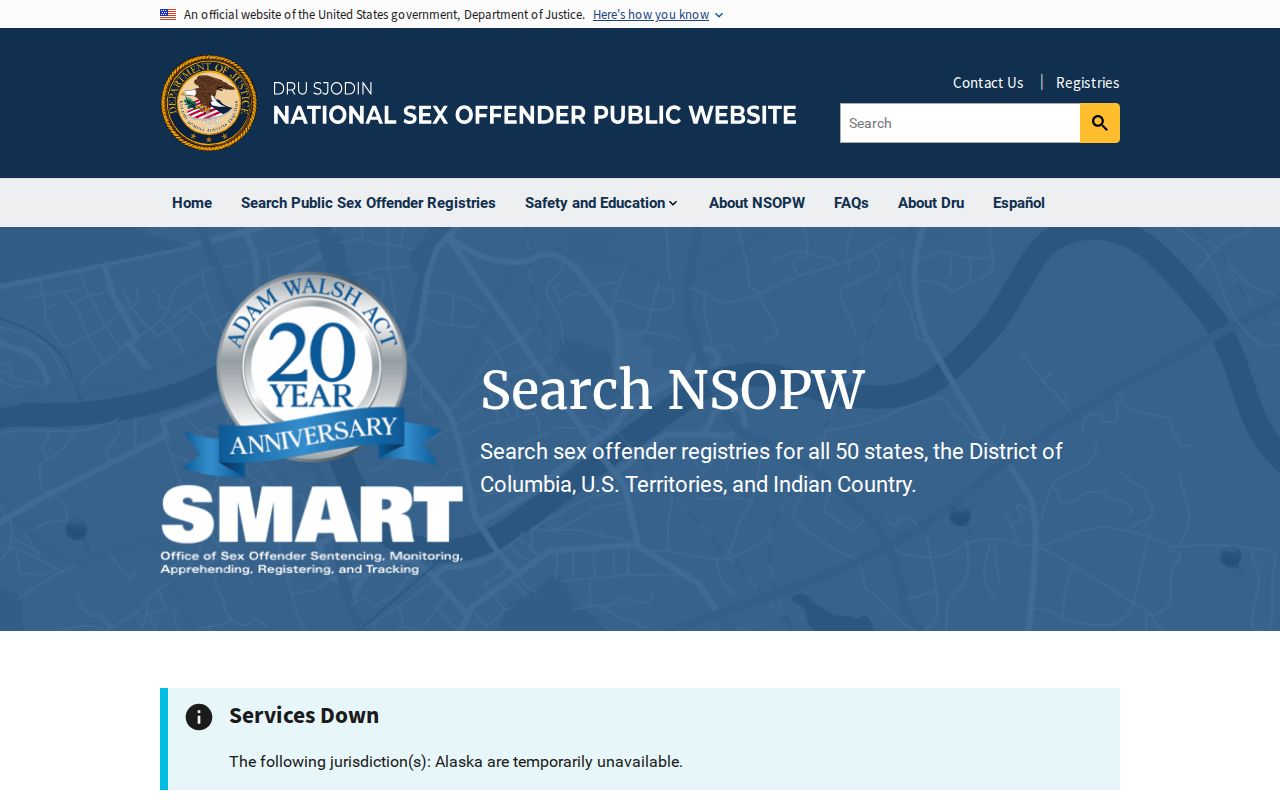
NSOPW gathers results from the underlying jurisdictions. Louisiana and local law enforcement remain the sources to contact about a Bossier profile, address, or compliance question.
Louisiana Registration Levels and Requirements
Louisiana uses three statutory tiers. The qualifying offense controls the tier, usual registration term, and in-person verification cycle. Tier I generally carries the shortest term and annual verification. Tier II ordinarily requires a longer term and checks every six months. Tier III carries lifetime registration in the ordinary case and a 90-day verification cycle. Specific rules, later convictions, and limited court relief can affect an individual result, so the profile and governing order control.
| Level / Tier | Duration | Verification Frequency |
|---|---|---|
| Tier I | 15 years in the ordinary case | Annual |
| Tier II | 25 years in the ordinary case | Every six months |
| Tier III | Lifetime in the ordinary case | Every 90 days |
Limited Routes to Shorten Registration
Registration does not end merely because many years have passed. Louisiana Revised Statutes 15:544 supplies the controlling periods and only limited routes for reduction or relief. A person must meet the law's conditions and use the proper court process. The public registry cannot decide eligibility, and sheriff staff cannot replace a court order.
Someone reviewing their own duty should collect the conviction record, sentencing documents, tier basis, registration history, and proof of compliance. A Louisiana attorney can identify whether any statutory petition is available. Until the court and registry formally change the duty, the published requirements remain in force.
Bossier Sheriff's Registry Role
Local registration is more than placing a dot on a map. The responsible law-enforcement office receives identifying and address information, conducts required verification, processes changes, and reports qualifying data to the state system. It can also investigate a failure to register or a suspected false address. Public users see only the fields Louisiana permits the registry to display.
This division of work explains the best correction route. A typographical or display issue can be reported to the registry program. A disputed Bossier address should also go to the local registering agency. Provide facts, not conclusions. The agency can check material that is not part of the public profile.
Community Notification and Lawful Use
Registry information supports awareness and practical safety planning. It can help a family learn about published locations, recognize a listed person, and decide when to ask law enforcement for verified facts. It cannot establish that someone committed a new offense. Nor should an old screenshot replace the current official profile.
Use registry data lawfully. Do not harass, threaten, intimidate, discriminate against, or confront a registrant or anyone at a listed address. Report an immediate danger to 911 and suspected noncompliance to the Bossier Parish Sheriff's Office or the police agency with jurisdiction.