
Bossier Parish Criminal Court Cases
The 26th Judicial District Court serves Bossier and Webster Parishes and is the main Bossier felony court. The Bossier Parish Clerk of Court preserves the docket, minutes, filed pleadings, orders, judgments, and copy record. Judges rule on sealing and access questions, while the clerk acts as custodian rather than legal adviser.
Jurisdiction matters. Bossier City Court separately handles criminal and traffic matters within its authority. Haughton Mayor’s Court and other local channels may retain town cases. A search that begins and ends at the district clerk can therefore miss a valid city or mayor’s-court matter.
Bossier Clerk Records at Burt Boulevard
The district criminal-record counter is at 204 Burt Boulevard, Benton, Louisiana 71006. Public hours are Monday through Friday, 8:30 a.m. to 4:30 p.m., except legal holidays. Call 318-965-2336 or email clerk@bossierclerk.com for procedural help, older-file availability, copy methods, and current charges. Staff may explain retrieval but cannot interpret guilt or recommend legal strategy.
The clerk’s public-counter source identifies the office serving parish case researchers.
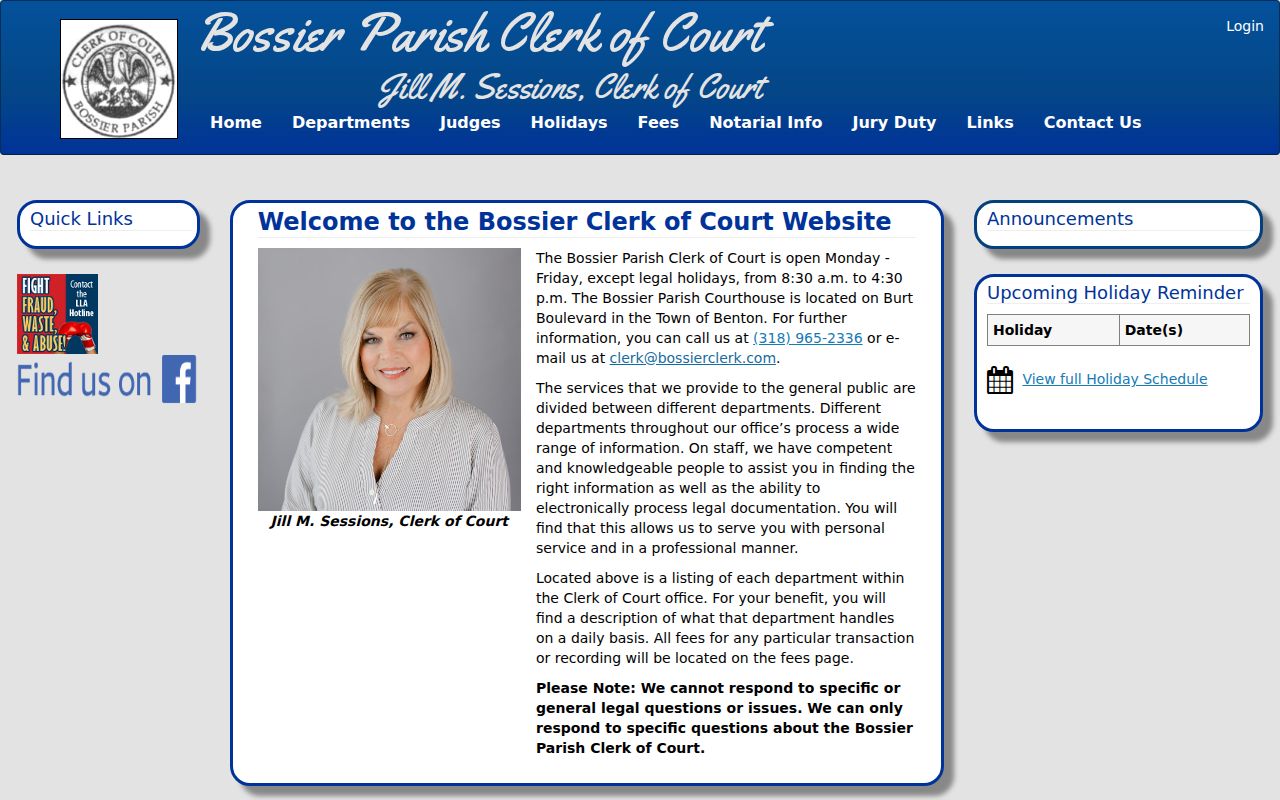
The Benton counter remains the fallback for older, non-indexed, or non-imaged district papers.
Searching Bossier Parish Case Records
Start at Bossier Clerk Online Services, which routes users to Clerk Connect and court-event resources. Remote access is not necessarily free: parish coverage, accounts, subscriptions, and document-image costs can vary. The 26th JDC calendar is useful for settings, but it is not a docket and does not prove disposition.
- Identify whether the matter belongs to 26th JDC, Bossier City Court, or a town court.
- Choose Bossier Parish and the available criminal or case-inquiry module in Clerk Connect.
- Search by docket number when available; otherwise use party-name variants and a filing-year range.
- Open the result and read docket entries chronologically, separating allegations from rulings.
- Ask the clerk for the docket sheet, underlying papers, or certified disposition when the online view is incomplete.
| Field Label | Type | Required | Notes |
|---|---|---|---|
| Parish | Select | Yes | Choose Bossier for parish cases |
| Module | Select | Yes | Availability depends on clerk product |
| Case number | Text | No | Most precise search route |
| Last/first name | Text | No | Use spelling and alias variants |
| Year/date range | Select/date | No | Narrows common-name results |
The official online-services source shows the available inquiry routes.
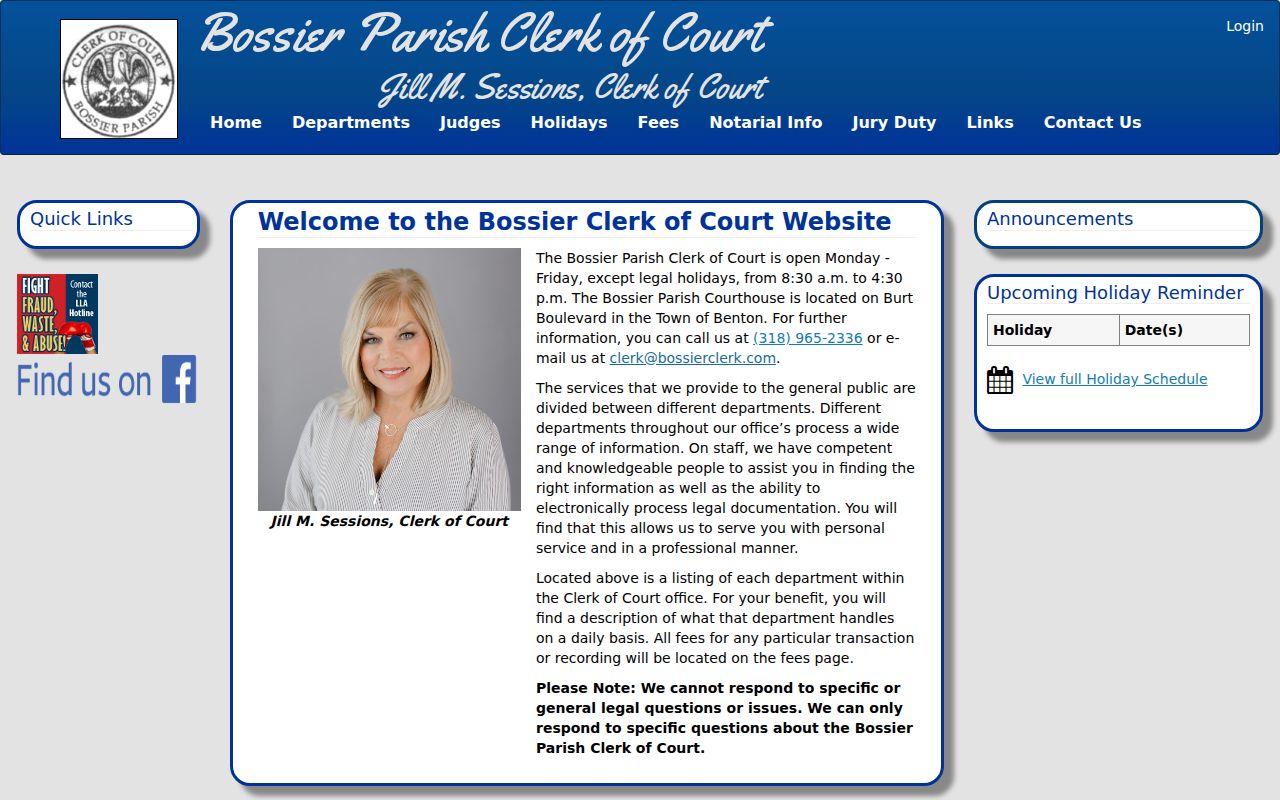
When an index entry lacks an image, the clerk can explain courthouse or copy access.
Calendar, Docket, and Rap Sheet Differ
A court calendar answers when a matter is set and which division is expected to hear it. A docket answers what has been filed and what happened in court. A Louisiana criminal-history record links reported arrest cycles and dispositions to a fingerprinted person. None substitutes for another. A postponed calendar event does not decide the case, and a state record may omit detailed motions even when its final disposition is accurate.
If the purpose is understanding a Bossier prosecution, the docket and filed judgment are the primary sources. If the purpose is correcting your own statewide history, obtain a Louisiana State Police Right to Review and supply a certified court disposition where the state cycle is incomplete.
The same distinction applies to the Bossier Parish Arrest Lookup: a jail charge reflects intake, while the court file reveals what the prosecutor filed. Start from the broader Bossier Parish criminal history overview when the needed source remains unclear.
Inside a Bossier Parish Case File
Request the parts that answer the actual question rather than every page. The charging instrument identifies the accusation selected by the prosecutor; minutes show what occurred at arraignment and hearings; the judgment and sentence establish the result. Probation and revocation filings can continue after the initial sentencing event.
| Case Number & Court | Identifies the docket, jurisdiction, division, and filing sequence. |
|---|---|
| Charging Document | Bill of information or indictment states charges filed, not guilt. |
| Docket Entries | Chronological index of filings, settings, appearances, and rulings. |
| Hearing Dates | Past and scheduled events, subject to continuance or change. |
| Disposition & Judgment | Shows dismissal, acquittal, plea, or conviction when entered. |
| Sentence & Conditions | Records incarceration, probation, fines, or other ordered terms. |
Requesting a Certified Disposition
Ask for the docket sheet, charging instrument, plea or trial minute, judgment, sentence, and disposition certification as needed. Provide the docket number, full case caption or party name, approximate filing year, and court division if known. State whether an ordinary copy or certification is required and request a current estimate before payment. A transcript or recording is a separate product and may depend on the court reporter and additional fees.
The clerk contact source provides the courthouse telephone, email, and address.
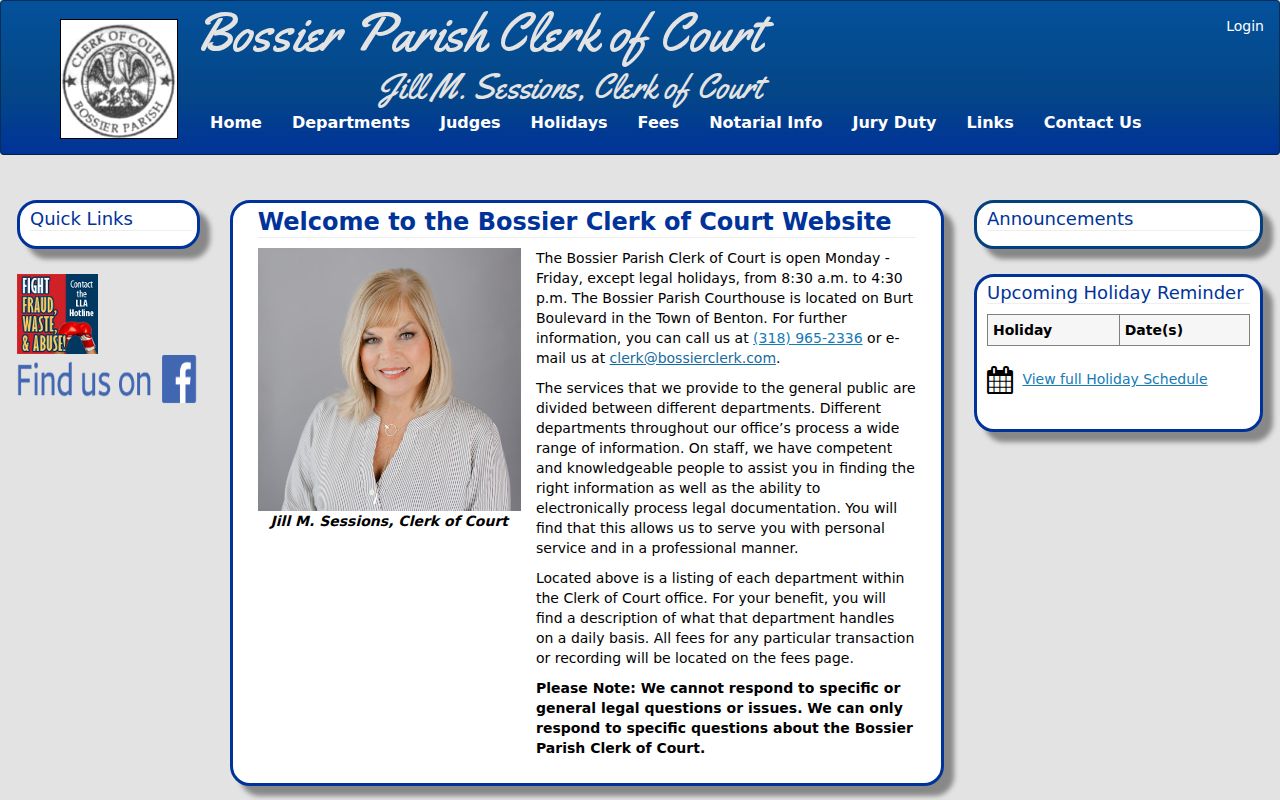
Certified disposition papers are especially useful when a fingerprint-linked state record lacks the reported outcome.
How a Criminal Case Moves
After an arrest, the district attorney determines whether and what to charge. Once a bill of information or indictment is filed, the clerk opens the criminal docket. Arraignment records the plea, pretrial proceedings address motions and discovery issues, and the matter may resolve through dismissal, plea, or trial. Sentencing follows a conviction, while later probation or revocation events can add entries.
Case flow: Charges Filed › Arraignment › Pretrial › Plea or Trial › Disposition › Sentencing
There is no research-supported universal Bossier timetable for each stage. Scheduling depends on division calendars, continuances, complexity, custody status, and motion practice. Read actual docket dates rather than estimating an outcome from elapsed time.
Reading a Bossier Criminal Docket
“Open” may mean unresolved, awaiting sentencing, subject to probation activity, or simply associated with an outstanding event. A bill of information or indictment is an accusation. A minute entry records what occurred in court. A plea or judgment paired with the sentence is the decisive material for outcome. “Nolle prosequi” or dismissal does not mean the public file was destroyed.
- Arraignment
- The appearance at which the filed accusation is addressed and a plea is entered.
- Minute entry
- The clerk’s record of courtroom action on a particular date.
- Disposition
- The recorded case outcome, which may be dismissal, acquittal, plea, or conviction.
- Expungement
- A separate Louisiana process that removes qualifying records from public access without physically destroying them.
Bossier City Court Uses Its Own Search
The Bossier City Court criminal inquiry accepts a case or ticket number or a last name, with Criminal, Traffic, or Both options. Results can display case number, defendant identifiers, filing date, section, case type, charges, disposition, court date, and a warrants field. Details may include aliases, assigned prosecutor, attorneys, and financial history.
A warrants field is not proof that process remains active. Call the City Court Criminal Division at 318-741-8594 or 318-741-8595 before relying on it. City jurisdiction and district jurisdiction are different, so determine which prosecutor and court received the matter before concluding no filed case exists.
When a case has been expunged, a public search may return no useful entry even though justice agencies retain access authorized by C.Cr.P. art. 973. A dismissal, acquittal, and expungement are not interchangeable labels: the first two describe outcomes, while the third is a later confidentiality process with separate eligibility and filing requirements.
Case Record Access & Restrictions
Louisiana court records are generally open subject to sealing, expungement, juvenile confidentiality, protected victim information, court rules, and other lawful restrictions. Victim addresses, medical information, presentence reports, juvenile material, sealed filings, and personal identifiers may be withheld or redacted. The remote view can contain less than the courthouse file, while some sealed material remains unavailable in either setting.
If a known case is absent online, confirm spelling, docket number, filing year, court, and jurisdiction with the clerk. A public-record request to police is not the route for papers filed with the court. Conversely, the clerk’s file will not necessarily contain a police agency’s complete investigative report.
Federal Cases Use a Separate Court
Bossier Parish is within the Western District of Louisiana. Federal prosecutions are not 26th JDC cases and use PACER for public federal dockets and documents. PACER requires an account and applies the current Judicial Conference fee schedule, subject to its low-use waiver rules. Search by court, case number, or party, then inspect docket reports and document links.
The Western District of Louisiana source identifies the federal court layer.
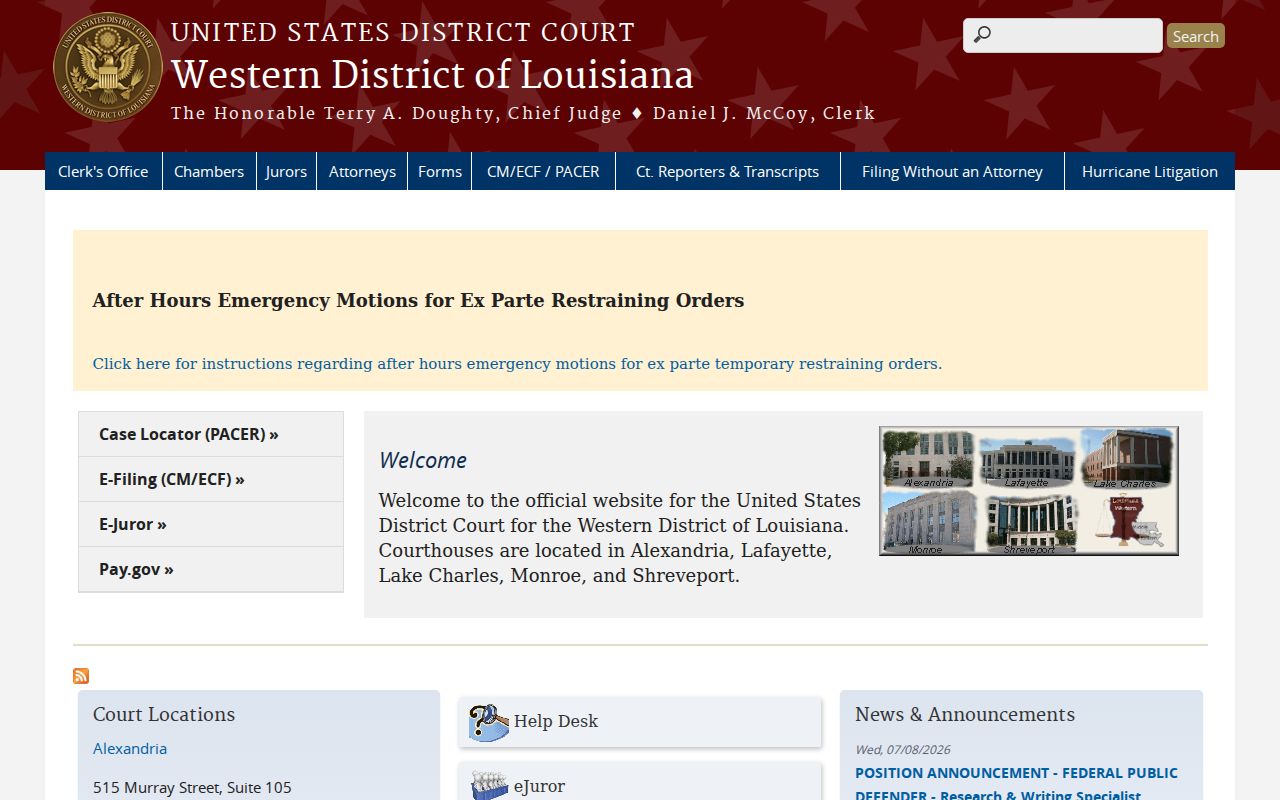
Federal and parish results should remain separate because neither database supplies the other court’s complete file.